What are the benefits of ginseng for skin?
01
Loading page…
Loading ingredient guide…
Skincare, simply explained
Ginseng brings skin-softening care and plant antioxidants to your routine. Explore the benefits of this Korean skincare ingredient, learn how to use it, and find an essence, serum or cream that feels right for your skin.

Ginseng root extract helps condition skin, leaving it feeling softer and smoother.
Ginseng skincare may help soften the look of fine lines, especially around the eyes.
Ginseng contains antioxidants: plant compounds that help neutralize free radicals, the unstable molecules that can put stress on skin.
Ginseng is a plant with a fleshy root that is used in Korean skincare. The species covered here is Panax ginseng, also called Korean or Asian ginseng. Its root is processed into an extract that can be added to essences, serums and creams.
The root contains natural plant compounds called ginsenosides. These are among the compounds researchers study to understand ginseng’s skincare properties. The root extract also has an established skin-conditioning role: it helps leave skin feeling soft and smooth.
You may come across both ginseng root extract and ginseng root water. The extract draws compounds from the root, while root water is made through steam distillation. They are different preparations, so look for Panax Ginseng Root Extract when choosing products for the ingredient covered in this guide.
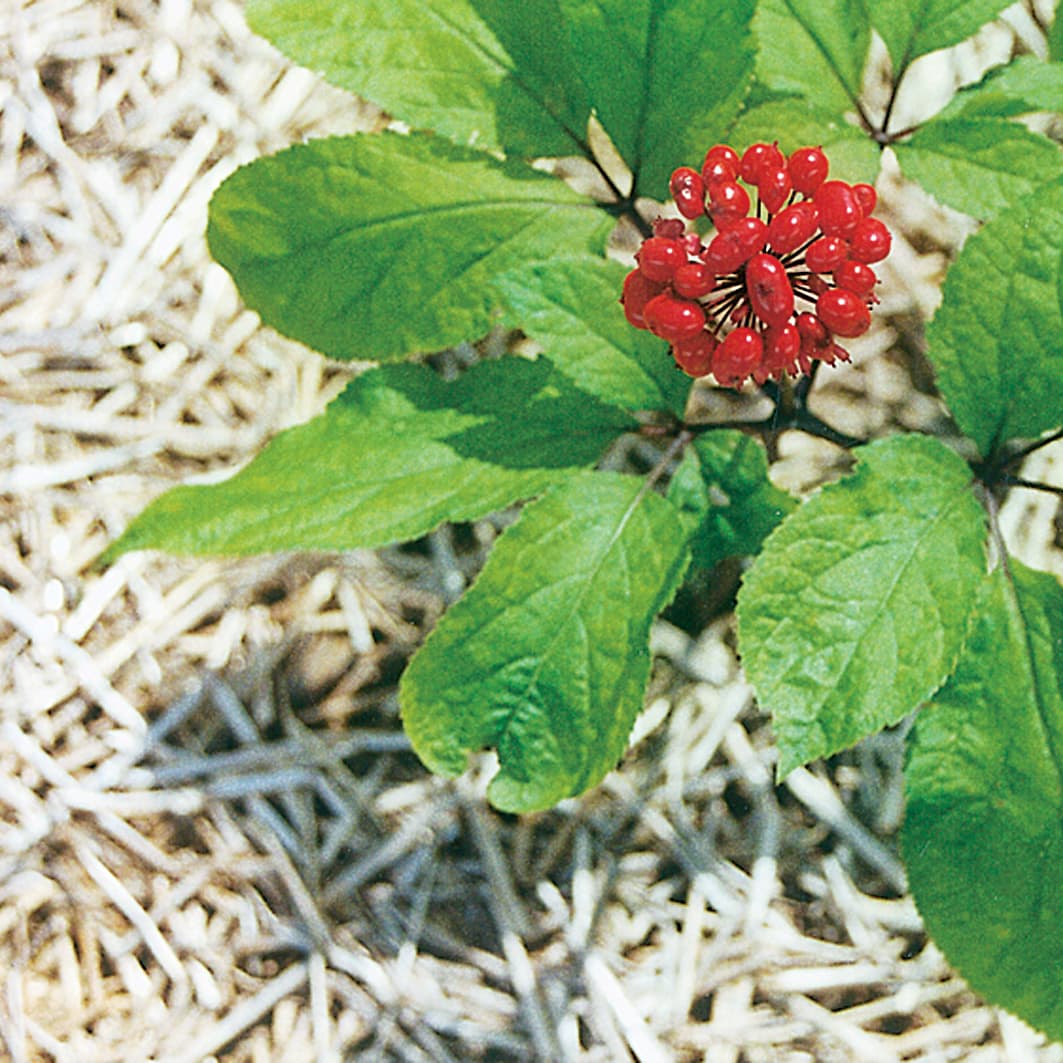
Panax ginseng is native to East Asia and has been grown in Korea for centuries. Farmers shelter the plants beneath shade to recreate their natural woodland conditions, a tradition still practiced in Geumsan, Korea. Its place in modern Korean skincare goes back decades, with ginseng face creams appearing in the 1960s. Today, you’ll find the root in everything from light essences to rich creams.
Choose your skincare step: a light essence, a serum or a comforting cream. Start with one ginseng product that fits your routine.
After cleansing, apply your ginseng essence or serum before moisturizer. If you chose a ginseng cream, use it at your moisturizing step.
Make it a regular part of your morning or evening routine, as often as the label recommends.
Finish your morning skincare with broad-spectrum sunscreen.
Keep your routine simple. These ingredients can sit alongside ginseng when you want hydration and everyday skin comfort.
Helps draw moisture into skin for a hydrated feel.
Supports the skin barrier as part of a well-rounded routine.
Helps skin hold onto moisture and feel comfortable.
Ginseng root extract is an emollient, which simply means it helps soften and smooth skin. This skin-conditioning role makes it a useful ingredient for a supple, comfortable feel.
In a 12-week skincare study, a ginseng cream improved the appearance of crow’s feet, the fine lines at the outer corners of the eyes. Researchers also measured a smoother skin surface around the treated area.
Antioxidants help neutralize free radicals, unstable molecules that can put stress on skin. Ginseng supplies these plant compounds, and research has shown that red ginseng extract keeps its antioxidant activity when added to skincare gels and emulsions.
Yes, when your product is designed for daily use. Follow the label and add it to your morning or evening routine. Introduce one new product at a time so you can get to know how it feels on your skin.
Look for a texture that suits your skin: a lightweight essence or serum if you prefer a fresh feel, or a richer cream if your skin feels dry. For sensitive skin, start with a fragrance-free option and patch test first.
They can be used in the same routine, and some products combine ginseng with a retinoid. Follow your retinol or retinal product’s directions and add one new product at a time so you can see how your skin responds.
Ginseng has an established role in conditioning skin. Research into visible fine lines is promising, but the human studies are small and use specific extracts or blends.
The fine-line study used an enzyme-modified ginseng extract. The antioxidant study measured free-radical scavenging in red-ginseng gels and emulsions; it did not measure visible changes in people.
2025-02
Confirms Panax ginseng’s Korean and Asian common names, root use and ginsenoside content. Used for ingredient identity; oral supplement findings are not evidence of skincare benefits.
2015-10 · DOI 10.1089/rej.2015.1660
A small 12-week study compared a specially enzyme-treated ginseng cream with the same base cream on opposite sides of the face. Of 23 women enrolled, 22 were included in the results.
2017-01 · DOI 10.1016/j.jgr.2016.01.001
Studied a blend of ginseng and hawthorn in 20 women over 12 weeks. Because both plant extracts were used together, the results do not tell us what ginseng alone would do.
On the ingredient list: Panax Ginseng Root Extract.
Also known as: Ginseng root extract, Korean ginseng or Asian ginseng.
Think consistent care over several weeks, especially for fine lines. A ginseng cream study measured improvements over 12 weeks. Follow your product’s directions and give your routine time.
Red and white ginseng are two ways of preparing Panax ginseng root. White ginseng is dried, while red ginseng is steamed first and then dried. In skincare, these names describe how the root is prepared before it is used in a formula.
Both come from ginseng roots, but they are made differently. Root extract draws out compounds from the root, while root water is collected during steam distillation. Check the ingredient list for Panax Ginseng Root Extract or Panax Ginseng Root Water to see which your product contains.
Ask your pregnancy care clinician about the product you want to use. Avoid formulas containing retinol or retinal during pregnancy.
2022-03 · DOI 10.1016/j.jgr.2021.12.002
Examined how a red-ginseng gel affected skin bacteria in 20 women. It did not assess acne improvement or visible skin benefits.
2021-09 · DOI 10.1016/j.jgr.2020.11.003
Laboratory research on one isolated ginseng compound and skin pigment. It did not test dark-spot results in people using a finished skincare product.
2024-11 · DOI 10.1016/j.jgr.2024.09.006
Reviews ginseng's potential uses in skincare. Much of the evidence comes from laboratory work or specific extracts, so the findings do not describe every ginseng product.
2015 · DOI 10.1177/1091581815610508
An expert safety review, funded by the cosmetics industry, covering ingredient definitions and skin patch tests. The panel found the reviewed ingredients safe at the cosmetic uses and concentrations assessed.
2026-01 · DOI 10.1016/j.waojou.2025.101164
Explores allergy to Korean ginseng when eaten. It does not measure how often reactions occur with ginseng skincare.
2018-11-03 · DOI 10.1186/s13223-018-0304-3
Reports two childhood allergic reactions involving American ginseng powder, a different species and form from the root extract discussed here. These cases do not establish the risk from everyday ginseng skincare.
2026-08-13
Explains what Panax Ginseng Root Extract is and its cosmetic roles, including helping skin feel softer and smoother.
2026-09-17
Identifies Panax Ginseng Root Water as a steam distillate from ginseng roots, explaining how it differs from root extract.
2021-08-10
2026-08-13
2026-08-13
2026-08-13
An official product ingredient list used as an example of ginseng root extract in a finished serum. The other ingredients also contribute to how the product feels and performs.
2026-08-13
The brand's ingredient list and product guidance for a formula combining ginseng with retinal, including its pregnancy advice.
2025-04-15 · DOI 10.1016/j.ijpharm.2025.125477
Tests red-ginseng extract in skincare gels and emulsions in the laboratory. The study measured antioxidant activity and skin-cell compatibility, rather than visible results on people's skin.
2026-09-17
Describes Panax ginseng's identity and native range, from the Russian Far East to Korea.
2026-09-17
Explains Korea's traditional ginseng farming, including the shade structures that recreate the plant's woodland growing conditions.
2026-09-17
Documents the brand's first ginseng cream, introduced in 1966. Used here for its account of ginseng's skincare history.
2022
Defines white and red ginseng by the way the roots are prepared: drying for white ginseng, and steaming followed by drying for red ginseng.
Ginsengpflanze by FloraFarm GmbH / Katharina Lohrie, via Wikimedia Commons. Resized and cropped for this layout; original photograph unchanged. Original photograph, licensed under CC BY 3.0.
Find your next routine favourite
Start with one product that fits your routine.
Use after cleansing, before your serum or moisturizer. An easy place to start if you enjoy a light, fresh feel.
Explore an essenceUse at your serum step, before moisturizer. Choose this step when you want to keep the cream you already love, and follow the product's directions for how often to apply it.
Explore a serum or ampouleMake it part of your moisturizing step. Choose a cream for a richer finish or an emulsion for a lighter layer.
Explore a moisturizer8 productsSwipe to explore