Loading ingredient guide…
Loading page…
Loading ingredient guide…
Skincare, simply explained
Licorice root extract helps skin feel soft and comfortable and is used in formulas for a more even-looking tone. It fits easily into a routine built around gentle hydration and care for dark spots.

Licorice root extract conditions skin, helping soften the rough feeling that can come with dryness.
Glycyrrhiza glabra root extract has a soothing role in skincare. It is a lovely ingredient to look for when you want a routine that feels gentle and comforting.
Licorice is used in brightening formulas for uneven-looking skin. Compounds such as glabridin are part of the interest in this root.
Licorice root extract is made from the roots of plants in the Glycyrrhiza family. Two species you’ll see in skincare are Glycyrrhiza glabra and Glycyrrhiza uralensis. Extracting the roots produces a mixture of plant compounds that can be incorporated into toners, serums and moisturizers.
The full botanical name tells you which species the extract comes from, while Root Extract identifies the part of the plant and the type of preparation. Licorice is used for skin conditioning and comfort, as well as in products focused on uneven tone. It is different from dipotassium glycyrrhizate, which is made from a specific licorice compound and appears under its own ingredient name.
On the ingredient list: Glycyrrhiza Glabra Root Extract, Glycyrrhiza Glabra (Licorice) Root Extract or Glycyrrhiza Uralensis Root Extract.
Also known as: Licorice root extract, liquorice root extract.
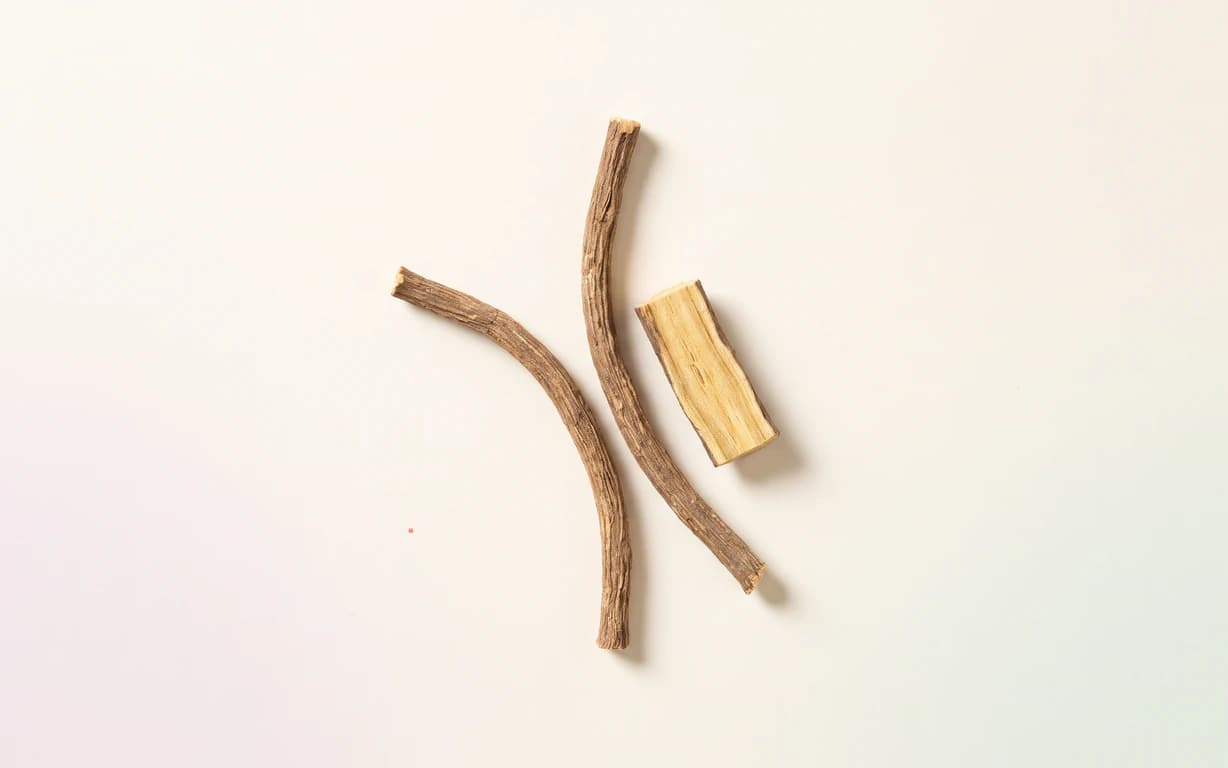
Choose a licorice toner, serum or moisturizer that fits the step you want to add.
Apply after cleansing. Use watery textures before thicker creams, following the product's directions.
Start with one new product and use it consistently at the recommended frequency.
Use broad-spectrum sunscreen in the morning, especially when caring for uneven tone or dark spots.
Keep a tone-focused routine comfortable with a little hydration and daily sunscreen.
A useful partner for a routine focused on more even-looking tone.
Adds hydration without needing another rich layer.
Finish with a comfortable moisturizer that helps hold on to moisture.
Melanin is the pigment that gives skin its color. Laboratory and animal research has explored how licorice compounds such as glabridin interact with pigment production.
Cosmetic ingredient records describe Glycyrrhiza glabra root extract as soothing and skin conditioning. Research on licorice gels has also explored skin comfort and redness, helping explain why the root features in gentle skincare routines.
It is a popular ingredient in formulas for uneven-looking tone and dark spots. Look for a daily serum you enjoy using, and keep sunscreen in your morning routine.
Many licorice toners and moisturizers are made for daily use. Follow your product's directions, particularly if it also contains exfoliating acids or a retinoid.
Yes. They can fit into the same tone-focused routine. A formula containing both keeps the extra steps to a minimum.
Conditioning and soothing are recognized cosmetic roles. Tone research includes extracts and individual licorice compounds; the details below explain what was tested.
2026-08-13
Lists the conditioning, smoothing and soothing roles of Glycyrrhiza glabra root extract.
2026-08-13
Identifies the separately named Glycyrrhiza uralensis root extract.
2008
Identifies the separately named licorice preparations, including Glycyrrhiza Glabra (Licorice) Root Extract, and reviews cosmetic use.
2003
A two-week trial of prepared licorice gels in people with atopic dermatitis. This is context for soothing research, not a claim that everyday skincare treats eczema.
It is usually chosen for conditioning, comfort and tone care. If your licorice product exfoliates, check for an exfoliating ingredient such as an AHA, BHA or PHA.
No. Root extract is a mixture of plant compounds. Dipotassium glycyrrhizate is a specific licorice-related ingredient used for skin conditioning. Each has its own name on the ingredient list.
Use a licorice toner after cleansing, a serum before moisturizer, or a cream at your moisturizing step. You only need the format that suits your routine.
2025
Laboratory and animal research on a particular extract and isolated compounds. It explains pigment-related mechanisms rather than measuring dark-spot improvement from a retail serum.
2021-08-10
A simple way to introduce a new finished product on a small area before using it more widely.
Find your next routine favourite
Start with one product that fits your routine.
Use at your serum step, before moisturizer. Choose this step when you want to keep the cream you already love, and follow the product's directions for how often to apply it.
Explore a serum or ampouleMake it part of your moisturizing step. Choose a cream for a richer finish or an emulsion for a lighter layer.
Explore a moisturizer8 productsSwipe to explore
