Loading ingredient guide…
Loading page…
Loading ingredient guide…
Skincare, simply explained
Shea butter helps soften dry-feeling skin and keep moisture from escaping. Its rich texture makes it a familiar choice for face creams, body lotions and balms when your skin needs extra comfort.

Shea butter helps smooth rough-feeling skin, whether you use it in a face cream, hand cream or body moisturizer.
Its protective, emollient layer helps limit moisture loss, a useful quality when skin feels dry.
Shea adds body to a formula. That makes it a good ingredient to look for if you prefer a cushiony cream over a light gel.
Shea butter is the fat obtained from the kernels inside the fruit of the shea tree, which grows in Africa. Its botanical name appears in skincare as Butyrospermum Parkii. The butter contains a mixture of fats, including those made with oleic and stearic fatty acids.
This composition gives shea its rich, buttery consistency. It serves two useful roles in a moisturizer: softening the skin's surface and helping slow the escape of water. It also adds body to the product itself, which is why it appears in thick creams and balms as well as lighter lotions.
Shea oil is the more liquid portion obtained from shea butter. It is listed separately from the butter, as are ingredients such as Hydrogenated Shea Butter that have been processed to change their properties.
On the ingredient list: Butyrospermum Parkii Butter, also written Butyrospermum Parkii (Shea) Butter.
Also known as: Shea butter.
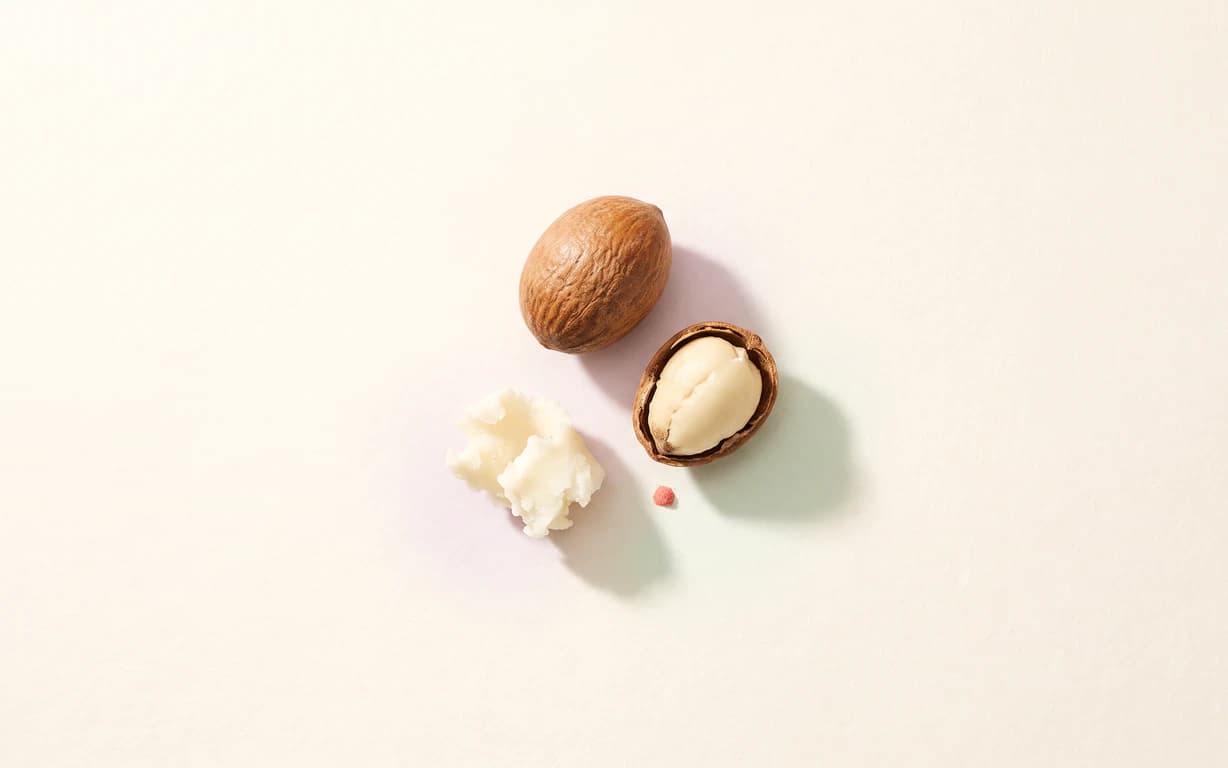
Choose a face cream, body lotion or balm for the area you want to moisturize.
Apply after cleansing or bathing, while skin is still slightly damp.
Start with a thin layer, adding a little more to dry areas such as hands, elbows or cheeks.
Reapply as the product directs. In the morning, use sunscreen after your face moisturizer.
Shea brings the rich finish. Pair it with water-binding ingredients in a moisturizer for skin that feels both hydrated and soft.
Cosmetic ingredient assessments identify shea butter as both a skin conditioner and an ingredient that helps limit water loss. These everyday moisturizing jobs are its most useful benefits.
A moisturizer can combine shea’s richness with ingredients that attract water. This is why a well-balanced cream can be a more complete moisturizing step than a butter on its own.
Yes, especially if you enjoy a rich moisturizer. Choose a facial formula and use a small amount first. Oily skin may prefer a lighter lotion.
It is a useful ingredient for softness and moisture retention. A cream that combines shea with hydrating ingredients gives you both water and a comfortable, emollient finish.
A single ingredient cannot tell you how a finished product will behave on your face. If you are prone to clogged pores, choose a facial moisturizer labeled non-comedogenic and pay attention to how your skin responds.
Shea butter’s strongest support is its established emollient and moisture-retaining function. Specific disease-treatment, scar-removal and anti-inflammatory claims are not established by the sources used here.
Safety assessments describe cosmetic functions and use, rather than proving every benefit in a clinical trial. A small experiment on irritated skin did not find shea butter significantly better than water at reducing irritation.
2017-10-05
Defines the butter and its skin-conditioning, moisture-retaining and texture-building roles. These cosmetic functions do not establish treatment for eczema, stretch marks or sun damage.
2024-01-02 · DOI 10.1177/10915818231224230
Reviews 13 shea-derived ingredients and concludes they are safe under the reviewed cosmetic uses when formulated to avoid sensitization. Butter and oil remain distinct ingredients.
1996-02
A small study comparing individual lipids after experimental irritation. Shea butter did not significantly outperform water, so this does not support an anti-inflammatory benefit claim.
No. They come from the same plant but are separately named cosmetic ingredients. This guide covers Butyrospermum Parkii Butter.
Shea can moisturize the area and improve how dry skin feels. There is not enough evidence to say it removes existing stretch marks.
A shea-containing moisturizer can fit into a retinol routine when your skin wants a richer finish. Follow the retinol’s directions and introduce new products separately.
2021-08-10
Dermatologists explain how to try a finished skincare product on a small area before using it more widely.
Find your next routine favourite
Start with one product that fits your routine.
Make it part of your moisturizing step. Choose a cream for a richer finish or an emulsion for a lighter layer.
Explore a moisturizer2 productsSwipe to explore