Loading ingredient guide…
Loading page…
Loading ingredient guide…
Skincare, simply explained
Turmeric root extract is used in skincare to help skin feel soft and smooth. Learn what it does, how a cosmetic extract differs from kitchen turmeric, and how to use it in your routine.

Turmeric root extract is used to help maintain skin in good condition, adding botanical care to a finished skincare formula.
Early research on a turmeric-extract cream found improved skin elasticity: the way skin springs back after being gently stretched.
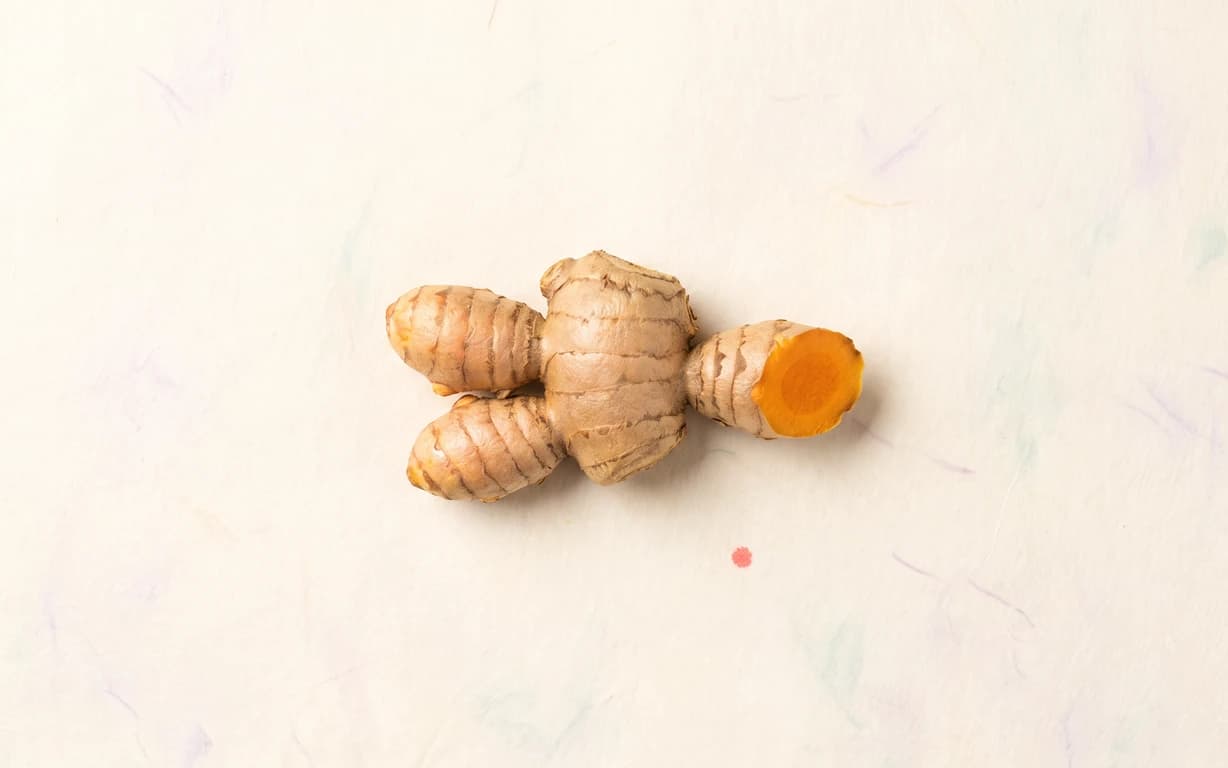
Turmeric root extract comes from Curcuma longa, a plant in the ginger family. It is the same plant that gives us the golden spice, but skincare uses a prepared extract that can be blended into a cream or serum.
Turmeric contains natural compounds called curcuminoids, including curcumin, which gives the spice its yellow color. Curcumin is one part of turmeric; a root extract contains a mixture of plant compounds. The extract is used in cosmetics to help keep skin feeling soft and smooth.
Turmeric powder, turmeric oil and isolated curcumin are separate ingredients with different textures and compositions. A finished skincare product gives you the extract in a formula designed to spread comfortably on skin, without the grainy texture of kitchen turmeric.
On the ingredient list: Curcuma Longa (Turmeric) Root Extract.
Also known as: Turmeric extract or turmeric root extract.
Choose a finished skincare product containing turmeric root extract, such as a serum or moisturizer.
Apply a serum after cleansing and before cream. Use a moisturizer at your usual moisturizing step.
Follow the formula’s directions for frequency and application area, especially if it also contains exfoliating or brightening ingredients.
Keep sunscreen in your morning routine. There is no need to add kitchen turmeric or a homemade mask.
Keep turmeric as one part of a balanced formula. Build the rest of your routine around the benefits you want most.
Adds straightforward hydration to a botanical skincare routine.
An ingredient to consider when uneven-looking tone is your main concern.
Useful in a moisturizer when skin needs a more comfortable finish.
Turmeric root extract is recognized as a skin-conditioning ingredient, helping keep skin feeling cared for in an everyday routine.
A study combining laboratory work with a human skin assessment found improved facial elasticity after using a turmeric-extract cream.
Choose a finished skincare product instead. Kitchen powder is a different preparation from a cosmetic extract and can leave color on skin or fabric. A homemade mask is not the formula used in skincare studies.
No. Curcumin is one compound found in turmeric. Root extract is a mixture of compounds, so research on isolated curcumin does not automatically describe a turmeric-extract product.
It is too early to promise that from turmeric root extract alone. If uneven tone is your main concern, choose a formula designed for that goal and keep daily sunscreen in your routine.
Turmeric root extract has a recognized conditioning role. A human study of a particular cream offers early evidence for elasticity; research on curcumin, supplements and other turmeric preparations is separate.
The elasticity paper combines work on an extract and isolated compounds with a cream study. The available abstract does not give full sample and formula details. It is an early finding, not proof that every turmeric product smooths skin or removes pigmentation.
2026-09-18
Plant identity, ginger-family background and the relationship between turmeric, curcuminoids and curcumin. Accessed September 18, 2026. Used for the ingredient explanation, not to transfer oral supplement findings to skincare.
2019-03-01
Defines the root extract and lists topical skin-conditioning and fragrance roles. Its concentration restriction belongs to the Canadian natural-health-product context, not a universal skincare target.
2018-03 · DOI 10.1016/j.jbiosc.2017.10.001
Reports laboratory findings and improved facial elasticity with a turmeric-extract cream. Authors include researchers at Shiseido; the abstract does not provide full clinical sample or formula details.
Follow your product’s directions. A daily moisturizer and an exfoliating mask can both contain turmeric but need very different routines.
That depends on the finished product and its color. Follow the label, allow it to settle before dressing, and keep strongly colored formulas away from pale fabrics.
A finished turmeric formula can fit alongside either. Follow the directions for each product and introduce them separately so it is easy to tell what suits your skin.
2023-11 · DOI 10.1111/cod.14401
A case report illustrates that turmeric contact allergy is possible. It concerns turmeric exposure in a cultural adornment, not a measure of allergy frequency from finished skincare.
2021-08-10
Dermatologists explain how to try a finished skincare product on a small area before using it more widely.
Find your next routine favourite
Start with one product that fits your routine.
Use at your serum step, before moisturizer. Choose this step when you want to keep the cream you already love, and follow the product's directions for how often to apply it.
Explore a serum or ampouleMake it part of your moisturizing step. Choose a cream for a richer finish or an emulsion for a lighter layer.
Explore a moisturizer8 productsSwipe to explore