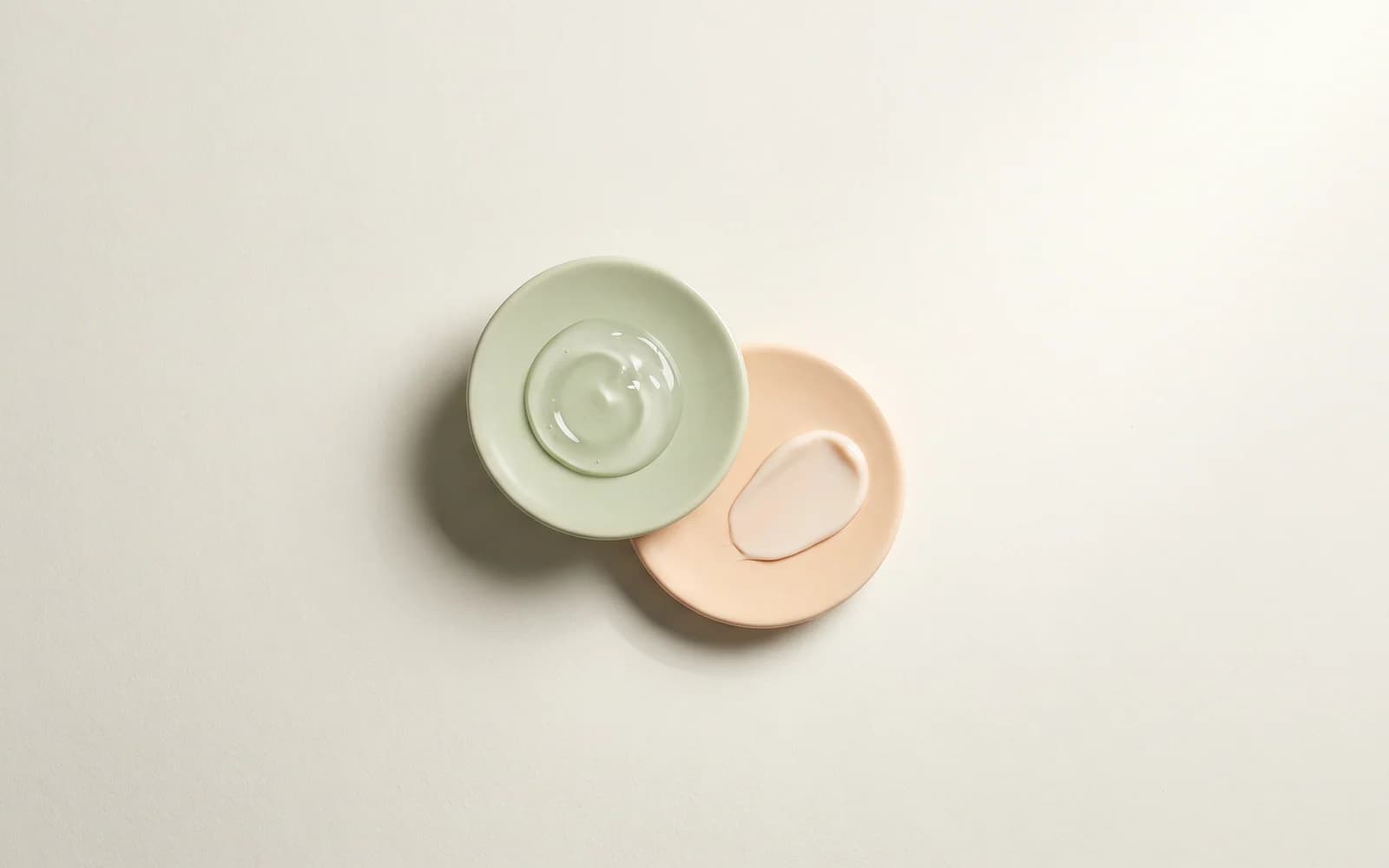
Korean moisturizers for combination skin: finding the right balance
Updated September 10, 2026
A moisturizer can feel lovely on your cheeks and too much on your nose. For combination skin, that mismatch is the place to start: choose a lighter gel if a coated feeling is your main complaint, or consider a richer cream if dry areas stay uncomfortable. You may be able to use one product in different amounts.
Three Korean moisturizers offer useful starting points: Beauty of Joseon Red Bean Water Gel for a light gel option, Purito Oat In Calming Gel Cream for a vegan-labeled alternative, and AESTURA ATOBARRIER365 Cream when dry areas need a richer choice. None is a universal winner.
This comparison uses current manufacturer ingredient lists and directions, with a US retailer check for AESTURA. We haven't wear-tested these products or pooled customer reviews. The aim is to narrow your next purchase to one sensible option.
Choose the problem your moisturizer needs to solve
An oily T-zone and dry cheeks don't necessarily need two purchases. The American Academy of Dermatology (AAD) discusses , including using it on dry spots and skipping oily areas where appropriate.
Before choosing a replacement, notice where your current product falls short:
Your cheeks feel comfortable, but your nose feels coated: Try less moisturizer on the oily area first. If the texture still bothers you, look at a lighter gel.
Your nose feels fine, but your cheeks become dry again: A richer cream may be worth considering for those areas. Buying another very light gel could leave the same problem unsolved.
Both areas feel comfortable until sunscreen or makeup goes on: Consider how the layers work together before deciding that the moisturizer alone needs replacing.
Products repeatedly sting or cause a rash: Stop the product causing the reaction and seek advice about the cause. A different texture isn't a reliable answer to ongoing irritation.
You can make this decision without adding a toner or serum. Start with the moisturizer's job and the products already on your shelf.
Three Korean moisturizers to compare
Beauty of Joseon Red Bean Water Gel: for a lighter moisturizer
Red Bean Water Gel is a 100 mL moisturizer that Beauty of Joseon describes as a lightweight gel for oily and combination skin. Its current ingredient list includes glycerin, dimethicone, betaine and panthenol, alongside red bean extract and peptides.
It is a reasonable first option to investigate when your existing cream feels heavier than you want. The brand's directions place it after treatment steps and before sunscreen during the day; it can also be used at night.
The main tradeoff is your dry areas. A light texture is only helpful if your cheeks stay comfortable too. If they already need a substantial cream, don't assume the words “combination skin” make this gel enough for the whole face.
The ingredient list also contains several extracts and peptides. Those aren't reasons by themselves to buy or reject it. Check the full list against ingredients you already know you need to avoid, and don't treat the red bean story as proof that it will control your oil or prevent breakouts.
Purito Oat In Calming Gel Cream: a vegan-labeled gel option
Oat In Calming Gel Cream is another 100 mL option. Purito describes it as a lightweight gel and labels it vegan friendly. The current list starts with 77% oat seed water and includes glycerin, squalane, panthenol and beta-glucan.
This is worth comparing with Red Bean Water Gel if you want a light texture and an explicit vegan label. That gives you a practical distinction between the two; there is no head-to-head evidence here establishing that one hydrates better.
Purito's FAQ says the refreshed name and packaging did not change the formula. Still, match the ingredient list on the item you buy. The brand uses the wording “No Synthetic Fragrance”; that is not a promise that nobody will react to it.
Consider another option if oat ingredients are something you've been advised to avoid. Like the BOJ gel, it may also need more help on persistently dry areas. Don't buy both gels at once to find out: choose the one that better matches your preferences, then introduce it on its own.
AESTURA ATOBARRIER365 Cream: when dry areas need a richer option
ATOBARRIER365 Cream is the richer candidate in this comparison. AESTURA positions it for dry and sensitive skin. The current formula lists glycerin, squalane, dimethicone, cholesterol, niacinamide and Ceramide NP, among other ingredients.
The US Sephora listing identifies the standard size as 80 mL and describes a rich cream. Its ingredient sequence agrees with the manufacturer's current list. Both give morning and evening application directions and describe visible ceramide capsules that soften as you smooth on the cream.
Consider this when a lightweight moisturizer leaves dry patches wanting more. You don't have to apply the same amount to a comfortable forehead as to dry cheeks.
The tradeoff is the richer texture: it may be more than you enjoy under daytime layers. It also contains niacinamide, so check that detail if you avoid it. This is the Cream, not AESTURA's Lotion or Hydro Soothing Cream; those names should not be treated as interchangeable formulas.
Compare the label without trying to predict everything
All three contain glycerin. That shared ingredient doesn't make the finished products identical, or tell you which one will sit best under your sunscreen. Our glycerin guide explains why the whole formula matters.
Ceramide language needs the same care. AESTURA's current list includes Ceramide NP and other lipid ingredients, but counting ceramide names won't establish whether a cream will feel comfortable on your nose. Use the ceramides guide for the ingredient background, then return to the texture and use decision.
If breakouts are a concern, the AAD suggests looking for labels such as oil-free or non-comedogenic. These indicate a moisturizer is less likely to cause acne; they don't guarantee that every person will tolerate it. A moisturizing cream also isn't a substitute for an acne treatment plan.
Be cautious about using “hypoallergenic” as your deciding factor. The FDA states that the term has no federal standard or definition. If you have a known allergy, the relevant ingredient and your clinician's advice matter more than that front-label wording.
A small comparison you can make at home
Once a new moisturizer has passed an initial small-area check, assess it during your normal day. Keep the other products familiar so you aren't trying to judge several changes together.
Use three notes rather than a score out of ten:
Cheeks: Comfortable after application, or asking for more moisture later?
Forehead and nose: Comfortable with the amount used, or coated enough that you keep wanting to wipe them?
Usual daytime layers: Do sunscreen and makeup sit acceptably over it?
If the cheeks are comfortable and the T-zone feels coated, try a smaller moisturizer amount there before abandoning the product. If the T-zone is fine but the cheeks remain dry, try more on those spots or keep a familiar richer cream for them. If both areas feel good, you can stop searching.
This is a practical comfort check, not a clinical test or a way to diagnose acne. Don't keep applying a product through itching, swelling or a rash to complete the comparison.
Buy the right version and a useful amount
Check the full name and size, rather than choosing from the brand name or package color. In this shortlist, the two gels are 100 mL and the standard AESTURA cream is 80 mL. A smaller-looking price does not necessarily buy more product.
To compare value, divide the price by the volume and multiply by ten. For example, a hypothetical $20 moisturizer in a 50 mL pack costs $4 per 10 mL; a $24 pack containing 100 mL costs $2.40 per 10 mL. Those are arithmetic examples, not current prices for these products. Compare the actual checkout total, including delivery, before ordering.
A larger pack is only useful if you will use it. If you expect to apply a richer cream just to small dry areas, buying several large tubes to reach a discount may not help. Look at the item's expiry and after-opening instructions, and consider a smaller size if available.
For an ingredient-sensitive purchase, read the package list too. For example, AESTURA's US page calls the cream fragrance-free but also contains generic ingredient-callout wording about synthetic fragrance. If fragrance avoidance is essential for you, ask the manufacturer to confirm the exact item instead of resolving conflicting website wording by guesswork.
Introduce it gently, then keep the routine simple
The AAD recommends trying a product on a small area first, generally twice daily for seven to ten days. Use the normal amount and follow the product instructions. A clear small-area check can help you spot a reaction, but it doesn't guarantee how the product will behave over your whole face.
For ordinary moisturizing, applying to slightly damp skin after washing can help retain moisture. The AAD's dry-skin guidance also recommends seeking help if dryness persists or products keep burning or stinging. Our sensitive-skin routine guide covers how to keep the surrounding steps manageable.
In the morning, keep full sunscreen coverage even if you use less moisturizer on oily areas. The AAD recommends broad-spectrum, water-resistant SPF 30 or higher. These three moisturizers are not your sunscreen step.
For the complete morning and evening order, see our Korean routine for combination skin. For this purchase, keep the question smaller: would a lighter gel solve the coated feeling, or would a richer cream make the dry areas more comfortable? Choose one direction first.
Compare four Korean moisturizers by texture, formula and routine. Choose a lighter gel or richer cream, and decide whether you need a separate night cream.